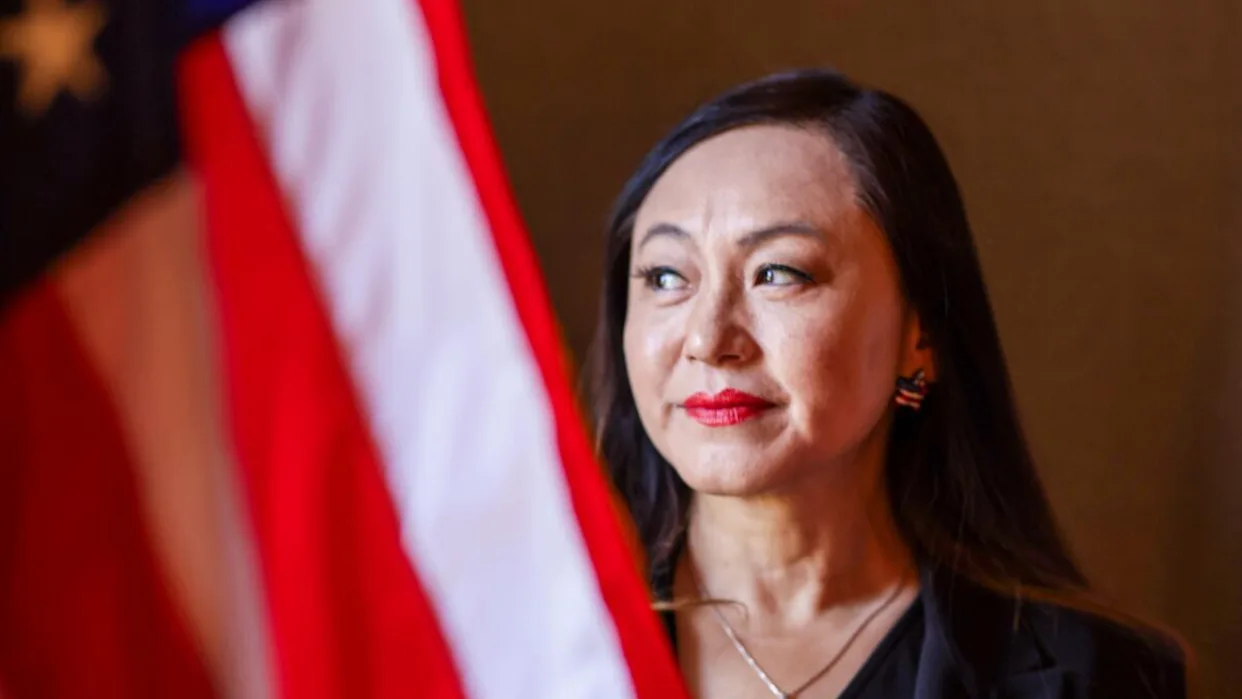
The political crisis in Arcadia, a city in southern California, escalated rapidly following the resignation of its mayor. Eileen Wang agreed to plead guilty to acting as an illegal agent of the Chinese government and left her position, according to federal authorities and local administration. The case opened a new focus of attention on foreign influence in municipal governments across the United States.
Wang, 58, had been elected in November 2022 to serve on the Arcadia City Council. In that city, the mayorship operates on a rotating system among the 5 council members. Therefore, her departure not only affects the municipality’s public image, but also the political stability of a local administration now attempting to distance itself from the scandal.
The accusation maintains that Wang acted within the United States following instructions from officials of the People’s Republic of China. Among those actions, she is attributed with having disseminated articles favorable to Beijing without prior notification to the U.S. government, as required by law. That point is central, because the offense does not revolve solely around the published content, but rather the legal obligation to register activity on behalf of a foreign government.
What exactly is Eileen Wang charged with?
According to the guilty plea agreement, Wang worked alongside Yaoning “Mike” Sun between late 2020 and 2022. Both allegedly acted on behalf of Chinese officials to promote the interests of the Beijing government within the United States. The mechanism, according to the accusation, consisted of disseminating propaganda favorable to China through a portal directed at the Chinese-American community.
That site was U.S. News Center, a news page that both managed. Authorities maintain that Chinese officials sent content or links to be published or amplified on that platform. One of the cited episodes occurred in June 2021, when an official forwarded to Wang a letter to the editor published in the Los Angeles Times by the Chinese consul general in Los Angeles.
That text denied reports of persecution, forced labor, and abuses against Uyghurs in Xinjiang. Minutes later, according to the accusation, Wang shared the link on her website. That fact appears as a concrete example of how, allegedly, the dissemination of messages aligned with Beijing’s official position was executed. The case, therefore, is not limited to political sympathy, but rather to alleged coordination with foreign authorities.
What role did Mike Sun and other contacts linked to the case play?
The investigation does not focus solely on Wang. Her collaborator Yaoning “Mike” Sun already pleaded guilty to the same charge and is serving a 4-year prison sentence. Additionally, his name appears in campaign records as treasurer of Wang’s 2022 candidacy, which adds a political dimension to the file and connects the case to the local electoral environment.
Authorities also mention John Chen, another man who pleaded guilty to acting as an agent of the Chinese government and was sentenced to 20 months in prison. The existence of several individuals involved reinforces the idea of a broader network of contacts, collaboration, and message dissemination. However, regarding Arcadia, the municipal administration insisted on separating Wang’s personal conduct from the city’s institutional functioning.
Dominic Lazzaretto, city manager, stated that neither the city hall’s finances nor city staff were involved. He also emphasized that the charges refer to actions that ceased after Wang was sworn into office in December 2022. That clarification is important for the city, because it seeks to limit institutional damage and convey that the investigation does not point, for now, to infiltration in daily municipal management.
How does this case impact Arcadia and what does the defense say?
Arcadia is located approximately 21 kilometers northeast of Los Angeles and has about 53,000 inhabitants. The city has a majority of residents of Asian origin and a high concentration of Chinese population. That context makes the case especially sensitive, because any simplistic reading can generate unfair stigmas against entire communities that have no connection whatsoever to the investigation.
Texas Train Deaths Rise to 7: 3 Are Mexican
The discovery of 7 bodies on Texas trains raises alarms about migratory dangers and human...
Venezuela Rejects Trump Calling Them the “51st State” of the USA
Venezuela rejects becoming the 51st state of the U.S. following Trump's controversial statements, defending its...
Wang’s defense attempted to frame the case as a sum of past personal errors. Her attorneys, Jason Liang and Brian Sun, said that the former mayor recognizes the seriousness of the charge and assumes responsibility for her actions. They also indicated that their client deeply regrets what occurred and that her commitment to the Arcadia community has not changed.
Another point of the defense is her former personal relationship with Mike Sun. The attorneys maintain that Wang trusted the wrong person and that this relationship led her into error. According to that version, the relationship ended in spring 2024. However, the case has already moved beyond the realm of personal explanations. It will now proceed in the federal criminal sphere, where the focus will be on determining the concrete magnitude of the conduct and the final sentence.
Why does this process transcend a single city?
The Arcadia case reflects a broader concern in the United States. In recent years, federal authorities have strengthened surveillance over covert activities by foreign governments on U.S. soil. When a local official is accused of acting as an unregistered agent, the matter ceases to be merely municipal and enters the realm of national security, political transparency, and public trust.
It also exposes the vulnerability of less visible spaces of power. Often, the debate about foreign interference focuses on Washington, on Congress, or on presidential campaigns. But this case shows that cities can also become scenarios of influence, especially when there are community networks, local media, and political actors with international connections.
For now, Wang’s resignation seeks to close a political chapter in Arcadia. However, the judicial case is just entering a decisive phase. The guilty plea, the possible sentence, and the details that emerge in court will be key to understanding how far the investigated activity went and what consequences it will leave in the relationship between local communities, municipal politics, and federal surveillance.