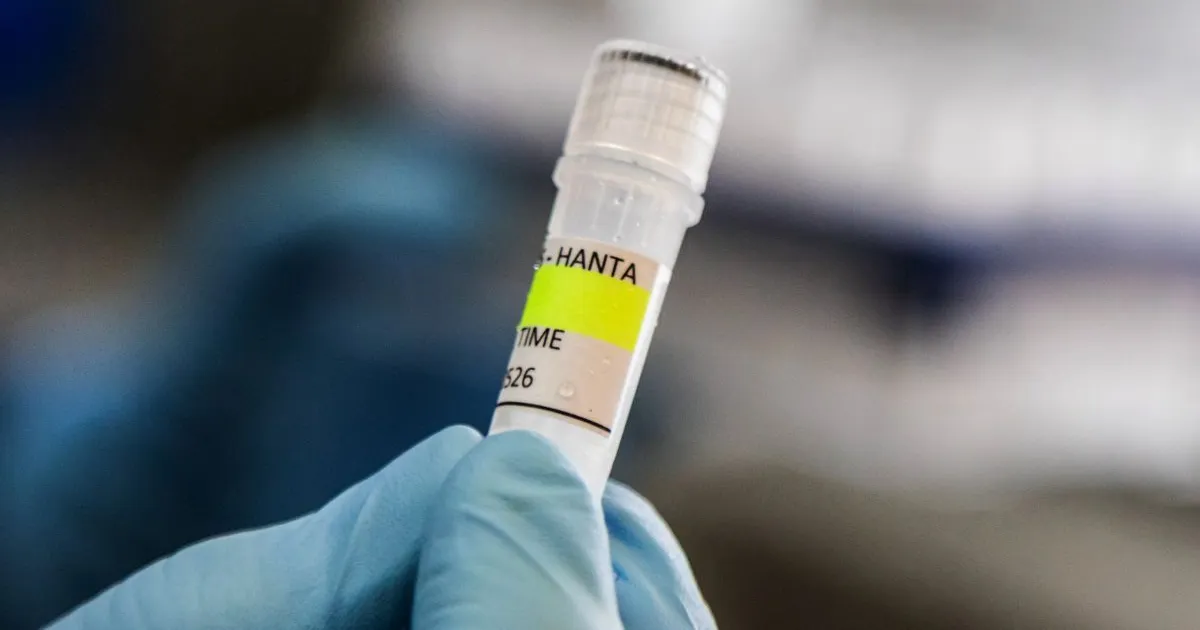
The United States has entered a new phase of health surveillance after confirming that 1 of the 17 citizens repatriated from the MV Hondius cruise ship tested positive for hantavirus. Additionally, a second passenger is showing mild symptoms and remains under reinforced medical observation. The news has heightened public attention, although authorities insist that the risk to the general population remains low.
The group was transported by air to U.S. territory after disembarking in Tenerife, Spain. The 2 passengers who tested positive via PCR for the Andes virus traveled in special biocontainment units. They were then taken to Nebraska for monitoring in high-security facilities.
The scene showed the level of precaution activated by the government. Evacuated passengers appeared in gowns, sterilized caps, and high-coverage face masks. That image recalled other recent health emergencies, but authorities emphasize that the current situation is not comparable to the COVID-19 pandemic.
Why is this case generating so much attention in the U.S.?
The concern has a very clear origin. The detected strain corresponds to the Andes virus, a rare variant that can be transmitted between people in limited circumstances. According to the WHO, this human-to-human capability is exceptional within the hantavirus family and requires close and infrequent contact.
The outbreak began during a polar voyage that departed from Ushuaia, Argentina. As the days passed, some passengers began to show fever, extreme exhaustion, and respiratory problems. What seemed like an isolated episode turned into an international alert with tracking in more than 20 countries.
Alarms intensified when at least 3 deaths associated with the outbreak were confirmed. The victims include a German woman and 2 Dutch nationals. This background explains why every new case, even outside the ship, now receives much stricter medical and political attention.
How did the U.S. health system respond?
The reaction was fast and highly coordinated. The repatriated individuals were taken from Tenerife to Offutt Air Force Base in Omaha, Nebraska. From there, they were transferred to specialized centers for emerging pathogens.
The passengers arrived at the ASPR Regional Emerging Special Pathogen Treatment Center at the University of Nebraska Medical Center. This complex is designed to isolate and observe high-risk infections. According to ASPR, this type of infrastructure is used when a disease requires intensive monitoring and special protocols.
The patient with mild symptoms will later be referred to a second specialized center at their final destination. Meanwhile, the rest of the group will remain under surveillance for several weeks. Health authorities are evaluating symptoms, temperature, close exposure, and possible respiratory changes throughout the incubation period.
What makes the Andes virus different from other hantaviruses?
The main difference lies in its mode of transmission. Most hantaviruses are associated with contact with the feces, saliva, or urine of infected rodents. In contrast, the Andes variant has documented cases of human-to-human transmission, albeit under very specific conditions.
This unique characteristic makes it necessary to strengthen the tracking of close contacts. For this reason, the United States opted for the use of biocontainment during the flight and high-security isolation on the ground. The CDC has noted that while asymptomatic passengers do not require mandatory quarantine, they must remain under observation for several weeks.
Another reason for medical interest is that initial symptoms can be confused with other illnesses. The condition can start with fever, fatigue, muscle pain, and general malaise. If it progresses, it can lead to respiratory complications that require immediate hospital care.
What implications does this episode have for travelers and authorities?
The case also leaves a lesson about international transport and emerging outbreaks. A cruise ship with passengers from many countries can turn a local focus into a global issue in just a few days. Because of this, Spain, the United States, Canada, Australia, and several European countries activated disembarkation, repatriation, and control operations.
The Spanish decision to allow disembarkation in Tenerife was central to organizing the response. While other ports avoided receiving the ship, the Canary Islands became the logistical point for evacuating and classifying passengers. This measure allowed for the separation of suspected cases, the organization of medical flights, and a reduction in uncertainty on board the vessel.
For now, the official message remains one of caution, not mass alarm. Health authorities maintain that the risk to the general population continues to be low. However, the confirmed case in the United States shows that surveillance will remain active and that any clinical change could modify the initial protocol.