
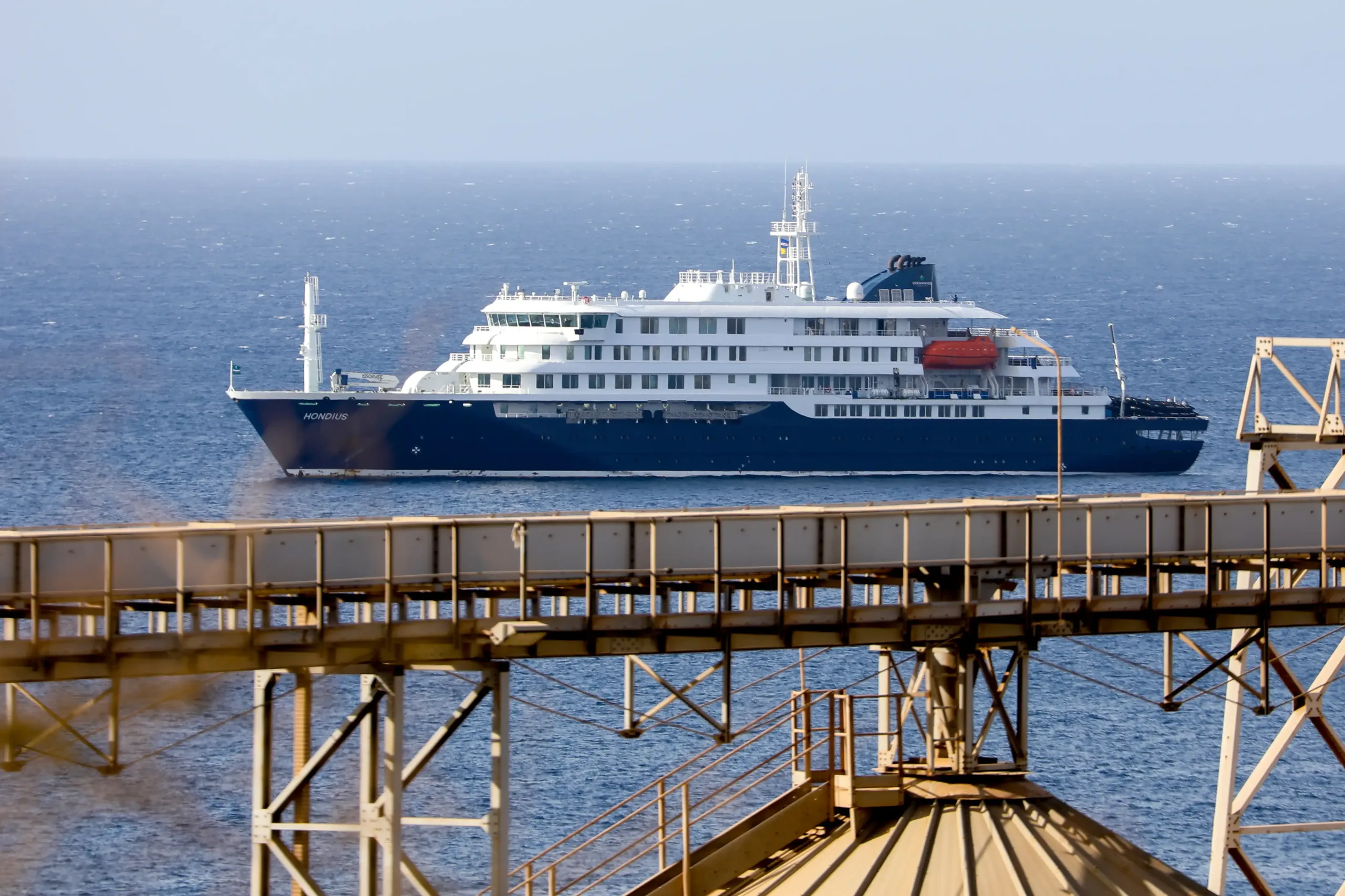
The hantavirus outbreak linked to the MV Hondius cruise ship has triggered health alerts in several countries. Although the World Health Organization considers the risk to the general public to remain low, the episode has already prompted contact tracing, isolation measures, and coordinated repatriations.
The concern arises not only from the number of cases. The detected strain also plays a role, as the WHO confirmed it is Andes hantavirus, an unusual variant that can exhibit limited person-to-person transmission, unlike other hantaviruses more commonly associated with rodent exposure. This detail changes the public health response and explains why the cruise ship case has received so much international attention.
So far, the numbers show a small but very serious outbreak. According to the WHO, as of Friday there were 6 confirmed cases, other suspected cases under evaluation, and 3 deaths related to the event. Additionally, the U.S. CDC activated a Level 3 response, which is the agency’s lowest emergency level, while several countries monitor exposed passengers.
How Many People Were Exposed and Where Are They?
The scale of the health operation shows why the outbreak has generated global attention. As of Friday, there were 147 people aboard the MV Hondius, including 87 passengers and 60 crew members, according to Oceanwide Expeditions. Among them were travelers from 23 nationalities, including 17 Americans.
The exposure network expanded before the outbreak was fully understood. Authorities are tracing 82 passengers and 6 crew members from an Airlink flight on April 25 between Saint Helena and Johannesburg, because a Dutch woman who had been on the ship and later died traveled on that route. Additionally, KLM reported that passengers from another flight in Johannesburg were also contacted, which that woman briefly boarded before disembarking due to her clinical deterioration.
The monitoring also reached Europe and the United States. British authorities said there are 2 confirmed cases among UK citizens and 1 additional suspected case linked to a passenger who disembarked in Tristan da Cunha. In the United States, 5 states—Arizona, California, Georgia, Texas, and Virginia—said they are monitoring 7 asymptomatic individuals, while New Jersey is following 2 exposed persons and Utah reported that at least 1 passenger was a resident of that state.
What Is Known About the Cases and Deaths?
The outbreak timeline helps understand its severity. According to the WHO, the first person is believed to have developed symptoms on April 6 and the last on April 28. That range places the likely primary exposure before and during the early days of the cruise.

The first death was that of a 70-year-old Dutch man. He presented with fever, headache, abdominal pain, and diarrhea on April 6, developed respiratory distress on April 11, and died that same day. Later, his 69-year-old wife became ill, left the ship on April 24, worsened during the journey, and died on April 26. On May 4, molecular testing confirmed she had hantavirus.
The third death was that of a German woman who presented with fever and pneumonia symptoms on April 28 and died on May 2 aboard the ship. Additionally, there are other confirmed cases in stable clinical condition. A ship’s doctor and a guide tested positive on May 6 and were evacuated to the Netherlands. Another passenger who disembarked in Saint Helena and later traveled to Switzerland tested positive on May 5 and remains isolated in a hospital.
Why Is the Andes Strain So Concerning?
Not all hantaviruses behave the same way. The WHO confirmed that the cruise ship cases correspond to Andes hantavirus, a strain endemic to parts of South America. This distinction matters because it is the only known variant with limited person-to-person transmission capability, especially in contexts of close and prolonged contact.

This does not mean it spreads like influenza or COVID-19. The WHO itself has emphasized that person-to-person transmission is rare and typically observed in enclosed settings or among very close contacts. The European Centre for Disease Prevention and Control explained for this reason that it considers all persons aboard as close contacts, due to the ship’s enclosed environment and shared activities.
Furthermore, the disease can be extremely severe. According to the CDC, approximately 38% of people who develop respiratory symptoms from hantavirus pulmonary syndrome may die. There is no approved vaccine or specific treatment. Therefore, early supportive care and rapid referral to an intensive care unit remain the primary tools for improving survival.
What Numbers Help Put This Outbreak in Perspective?
Although the current outbreak is small compared to other health emergencies, its lethality requires taking it very seriously. The WHO recommends that passengers and crew monitor symptoms for 45 days, because the incubation period can range from 1 to 6 weeks, and in some cases appear up to 8 weeks after exposure.
Historical data also helps put the case in context. According to CDC data, between 1993 and 2023, 890 hantavirus cases were reported in the United States, most in western states. Globally, a 2024 study estimated between 60,000 and 100,000 annual cases, with nearly half recorded in China.
The Andes strain, however, remains very uncommon in historical terms. Microbiologist Gustavo Palacios of Mount Sinai estimated there have been approximately 3,000 cases of that variant throughout history. A study published in The New England Journal of Medicine calculated that in an Argentine outbreak between 2018 and 2019, the average reproductive number was 2.12 before interventions and dropped to 0.96 after isolation and quarantine.
Learn More at Nueva News