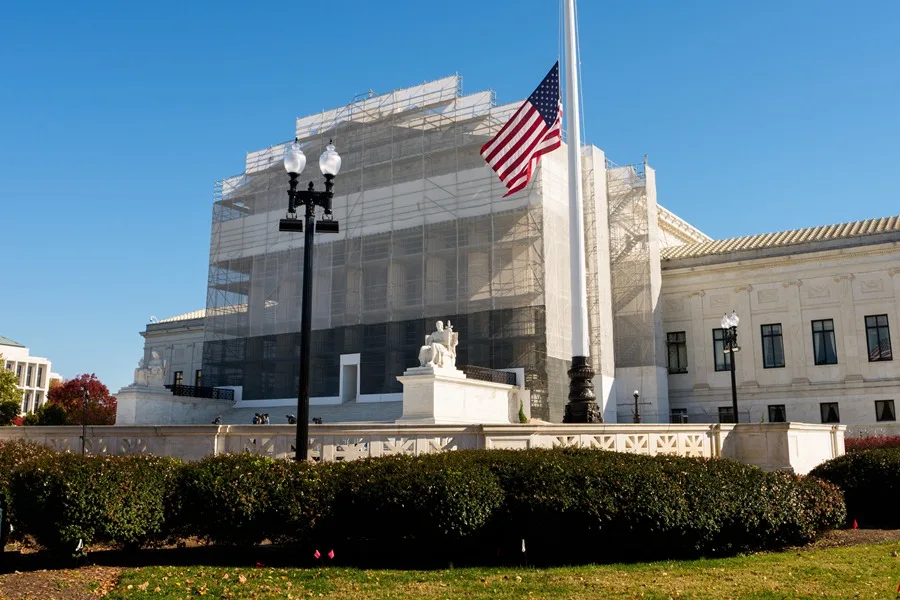
The conservative majority of the U.S. Supreme Court issued a sudden ruling. This legal decision clears the way for Alabama to use a highly controversial electoral map. The new congressional design includes only 1 Black-majority district.
State officials quickly appealed to the high court late Friday. Their primary goal was to suspend a previous ruling issued by a lower court. That lower court had blocked the legal use of the map approved in 2023.
The current situation generates an immense political dispute nationwide. Alabama has a total of 7 congressional districts for legislative representation. Reducing African American representation significantly weakens the power of all minority voters in the South.
Why Did the Supreme Court Intervene in Alabama’s Map?
The order from the country’s highest court was issued without any detailed explanation. This measure overturns the lower court’s decision that protected the created districts. Furthermore, the court returns the case for a much deeper and more exhaustive legal review.
This judicial move is supported by a forceful ruling issued in late April. According to public radio NPR, that previous decision regarding Louisiana weakened the Voting Rights Act. Now, the electoral landscape for minorities is much more complex and restrictive.
Alabama Attorney General, Republican Steve Marshall, openly celebrated the outcome. He posted a video on his social media to express his official stance. “Now the power to draw maps returns to elected representatives,” Marshall publicly stated.
What Impact Does This Decision Have on African American Voters?
Reactions to the firm judicial decision were immediate. Progressive Justice Sonia Sotomayor drafted a strong dissent along with 2 colleagues. She called the court order “inappropriate” for the delicate current electoral moment.
Sotomayor warned that the recent ruling will cause great confusion among the population. Alabama residents will begin voting in the primary elections very soon. These state elections are originally scheduled for next week, specifically May 19.
Civil rights groups expressed immense immediate alarm at this severe change. The President of the National Association for the Advancement of Colored People, Derrick Johnson, was emphatic. “We are witnessing a return to segregation laws,” Johnson stated with evident concern.
How Does This Affect the Political Landscape of the Southern U.S.?
The recent judicial decision transcends the borders of the southern state of Alabama. It represents the latest case of intervention in severe redistricting disputes. Political parties seek to secure clear advantages for the upcoming midterm elections.

Texas Train Deaths Rise to 7: 3 Are Mexican
The discovery of 7 bodies on Texas trains raises alarms about migratory dangers and human...

Venezuela Rejects Trump Calling Them the “51st State” of the USA
Venezuela rejects becoming the 51st state of the U.S. following Trump's controversial statements, defending its...
Several southern U.S. states are moving quickly to redraw their maps. According to the news agency AP, places like Tennessee and Florida approved new maps. These controversial congressional designs openly favor the Republican Party over its opponents.
On the other hand, various Democratic officials in Virginia requested swift judicial intervention. They are asking the Supreme Court to resolve a similar local redistricting dispute. The court has also recently been involved in maps for California, Texas, and Louisiana.
What Are the Long-Term Legal Repercussions?
The ruling on Alabama is highly technical and limited to that specific territory. However, the decision underscores the immense importance of the previous ruling on the state of Louisiana. A 6-3 majority of justices significantly limited discrimination lawsuits.
The new legal interpretation requires finding a “strong inference” of clear intentional discrimination. This departs from how federal courts reviewed civil lawsuits for decades. Before this, it was fully sufficient to demonstrate that the map had a real discriminatory effect.
Strong advocates for voting rights warn of a very dark future. They claim it will be almost impossible to file successful legal challenges under the new and strict jurisprudence. As reported by Reuters, this situation severely restricts the protection of various minorities.
What’s Next for the Midterm Elections?
Alabama’s Republican Governor, Kay Ivey, previously foresaw this complicated judicial scenario. She signed special legislation last week to adapt the tight state calendar. This new law allows for calling other primary elections for the House of Representatives.
This regulation applies only if the courts ultimately allow the use of different electoral districts. The state had voted in 2024 using a map drawn by a federal court. That progressive design granted Black voters 2 districts to elect their preferred representatives.
Now, Alabama’s tense electoral scenario reverts to the restrictive 2023 map. Minority voters will lose direct influence in 1 of those coveted key congressional seats. The great legal battle for control of Congress continues to intensify aggressively across the country.
Frequently Asked Questions (FAQs)
How many congressional districts does the state of Alabama currently have?
The state has a total of 7 congressional districts for the House of Representatives. With this new judicial ruling, only 1 will have a clear majority of African American voters.
What does the Supreme Court now require to prove electoral discrimination?
Conservative justices established that there must be a “strong inference” of demonstrable intentional discrimination. It is no longer sufficient to legally prove that the map has a discriminatory effect on the civilian population.
When will the next primary elections be held in the state of Alabama?
The important primary elections were officially scheduled for May 19. However, the new local legislation allows for organizing new dates if the various district maps change.