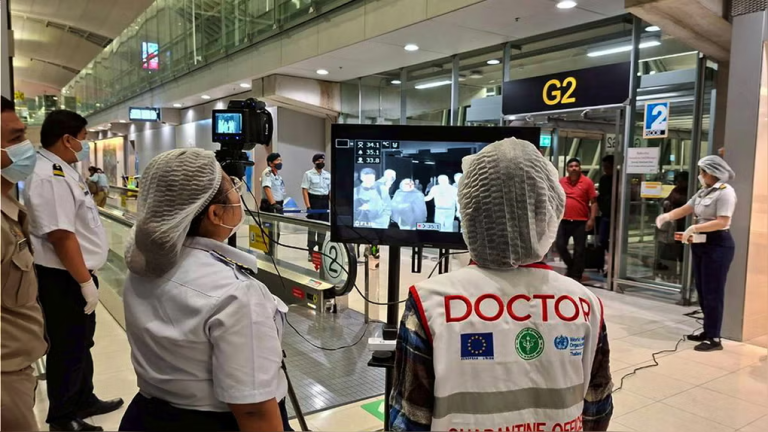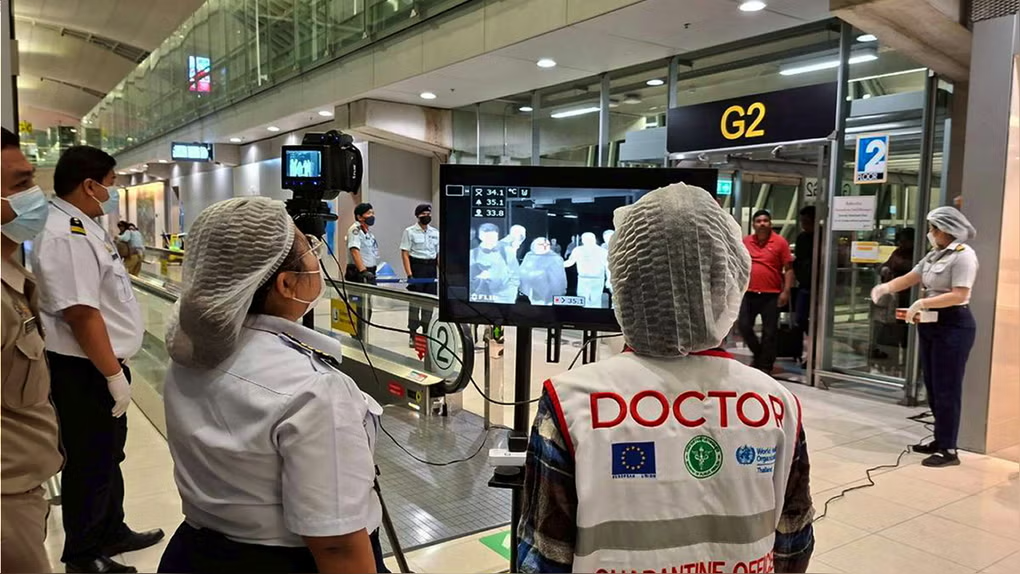
The World Health Organization sounded international alarms this Sunday. The recent ebola outbreak is quite serious. It constitutes a public health emergency of international importance in Africa.
This new epidemic primarily affects the Democratic Republic of the Congo and Uganda. The outbreak is being driven by the dangerous Bundibugyo virus. This is one of several Orthoebolavirus species that cause this disease.
The current situation does not yet meet the criteria for a pandemic emergency. However, the growing number of infections is alarming specialists. At least 80 suspected deaths have already been recorded in the African region.
How is ebola transmitted and what are its symptoms?
Ebola is a severe and often fatal disease. It is transmitted through direct contact with infected body fluids. This is according to the Centers for Disease Control and Prevention.
Transmission can also occur by touching contaminated medical materials. Another frequent route is contact with people who have died from the disease. Traditional burials represent an enormous health hazard in these areas.
Initial symptoms include sudden fever, profound fatigue, muscle pain, and headaches. Then sore throat appears, severe vomiting, and heavy diarrhea. As it progresses, the infection causes severe internal and external bleeding.
Why does science classify the virus as highly infectious?
Ebola is extremely infectious but is not considered extremely contagious. This means that a microscopic amount can cause the deadly disease. This is demonstrated by various laboratory experiments with non-human primates.
Scientific studies suggest truly terrifying data about this virus. Even a single viral particle can be sufficient to generate a lethal infection. This is why medical personnel require special suits with maximum protection.
Despite its lethality, ebola is considered only moderately contagious. Unlike other respiratory diseases, the virus does not travel through the air. Only direct physical contact with fluids allows viral transmission.
What characterizes the dangerous Bundibugyo variant currently circulating?
Scientists know of six different species of viruses linked to ebola. However, only three cause the majority of major epidemic outbreaks. These are the Ebola, Sudan, and Bundibugyo viruses.

Latinos en el Congo: El drama de 15 deportados por USA
Estados Unidos deporta a 15 migrantes de Perú, Ecuador y Colombia hacia el Congo bajo...

OMS activa alarma mundial: Lo que debes saber del ébola
La OMS declaró alerta mundial por el letal brote de ébola en África. La cepa...
The Bundibugyo pathogen is solely responsible for the current crisis. Unfortunately, there are no official treatments or specific medicines for this variant. There are also no approved vaccines to help protect the vulnerable population.
The historical mortality rate of the disease varies between 25 and 90 percent. The global average of fatalities hovers around 50 percent. For Bundibugyo, Doctors Without Borders estimates a fatality rate of 40 percent.
What are the official infection figures in the affected areas?
The epidemic is hitting hard the northeastern Ituri province in Congo. Through Saturday, eight laboratory-confirmed cases were reported there. Additionally, the border region has accumulated 246 suspected patients under strict medical observation.
The eastern city of Goma also recently identified an infected patient. This locality was taken over by the rebel coalition ADF/M23 last year. Their own spokespeople confirmed the presence of the infectious disease.