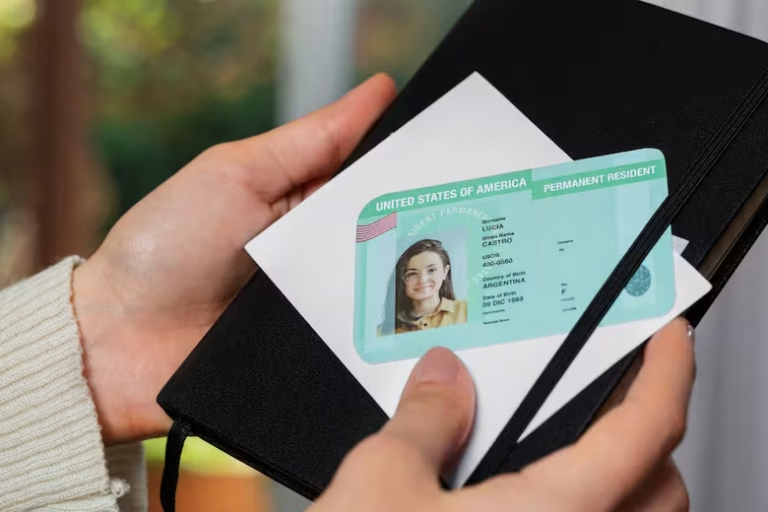
A 911 call requesting a welfare check ended in immigration detention and raised fresh alarm among immigrant families in Florida. The case of Axel Sánchez Toledo, reconstructed through an investigation by The Marshall Project in collaboration with the Miami Herald, shows how a routine police contact can turn into a deportation process.
According to the report, Sánchez Toledo called emergency services in Palm Beach County seeking help related to his 4-year-old daughter. However, when Sheriff’s Office deputies arrived, the encounter took a different turn. An officer checked his documentation, took his driver’s license, and returned to inform him he would be arrested for his immigration status and handed over to ICE.
The journalistic investigation maintains that the case is supported by court records, body camera footage and testimonies. This detail matters because it’s not just a family complaint. It is also backed by documentary and audiovisual evidence that allows us to follow, step by step, how a call for help ended with a father in the immigration detention system.
What happened is not an isolated fact within the current immigration debate. Rather, it reflects growing concern in Latino communities, where many immigrants fear calling police for help out of fear of ending up under federal custody. When that distrust takes hold, the effect is not limited to a single case. It also changes the relationship between the community and emergency services.
What Happened When Police Arrived at the Scene?
According to the reconstruction by The Marshall Project, the intervention began routinely. Officers responded to the 911 call and appeared to be checking on the child’s welfare. However, the interaction changed when one of the officers asked for and examined Sánchez Toledo’s documentation.
After reviewing his information, the officer informed him he would be detained for his immigration status. At that moment, according to the report, Sánchez Toledo attempted to flee. Two officers pursued him, and during the arrest he was struck with a Taser gun and physically subdued, while his partner screamed for the intervention to stop.
That turn is the heart of the case. The family had not called about a violent crime or a threat against officers. They called to request official help. That’s why the episode has generated such concern. For many immigration rights advocates, the message it sends is delicate: even seeking police support in a family matter can end in immigration detention.
The same report adds a key detail. The officer involved was part of the 287(g) program, an agreement that allows local police to work with the ICE on immigration-related tasks. That cooperation, pushed more forcefully during the current Donald Trump administration, has expanded the possibility that routine contacts with local authorities lead to deportation proceedings.
Why Is the 287(g) Program Under Scrutiny Again?
The 287(g) program has become one of the most sensitive points in the immigration debate in the United States. Its logic is simple, but its effects are profound. It allows local police departments to take on immigration-related tasks.