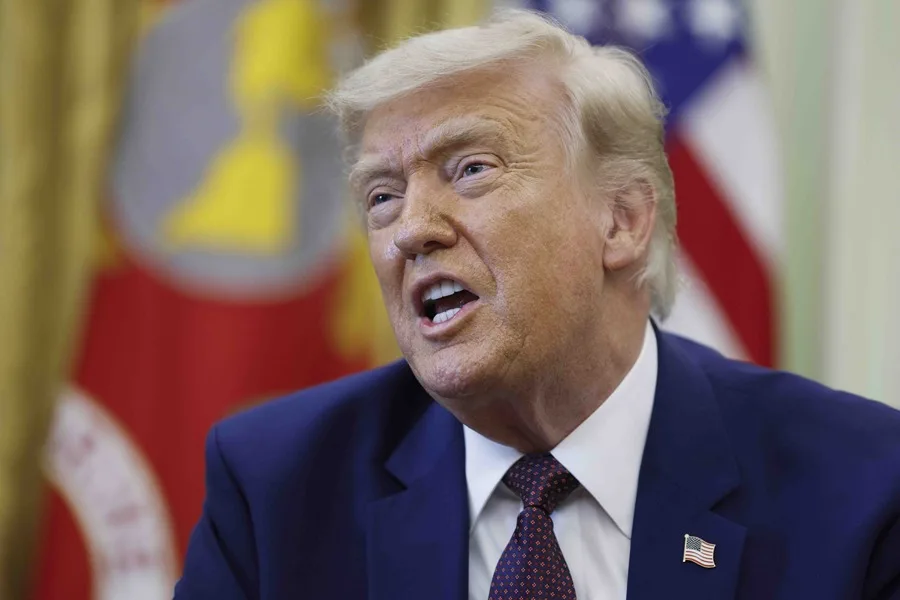
President Donald Trump activated a new commercial protectionist wall. The United States proposes new tariffs of at least 10% on imports from 60 trade partners. This is the president’s most significant measure to rebuild his tariff wall since his previous tariffs were struck down by the Supreme Court.
Following an investigation into forced labor, a 10% tariff on imports will be applied to Canada, Mexico, the European Union, Taiwan, and the United Kingdom. This was confirmed in a statement issued Tuesday night by the U.S. Office of the Trade Representative.
Products from other major economies, such as China, India, Japan, South Korea, Brazil, and Switzerland, will be subject to a tax of 12.5%. The Office of the Trade Representative stated that it will impose a lower tax rate on economies that prohibit imports of goods made with forced labor.
Why Does Trump Impose Tariffs on 60 Countries?
The U.S. Office of the Trade Representative (USTR) investigated whether the economies involved had not prohibited the importation of forced labor. According to its findings, none of the 60 economies effectively enforces a ban on forced labor imports.
“This creates a dynamic in which American workers are forced to compete globally on unequal terms,” said trade representative Jamieson Greer. “We will no longer tolerate this inequality,” Greer added in the official statement.
The USTR identified 34 specific products made with inputs produced through forced labor. These include cotton for clothing, critical minerals for solar products, and fish for fish oil.
This measure tests the tolerance of major economic partners. To a large extent, they have refrained from retaliating against Trump’s tariffs. They prefer to negotiate deals to reduce import taxes and ensure market access.
How Does This Affect Argentina and Other Latin American Countries?
Argentina is directly affected by the new measure. The country was included in the list of 60 economies subject to new tariffs, with a rate of 10% on its exports to the United States. The reason is that, according to the USTR, Argentina has not effectively enforced the ban on importing goods produced with forced labor.
So far, there are no official statements from the Argentine government on how it will respond. However, Foreign Minister Pablo Quirno has maintained contact with the USTR to discuss the matter. This could lead to negotiations to reduce the tax rate.