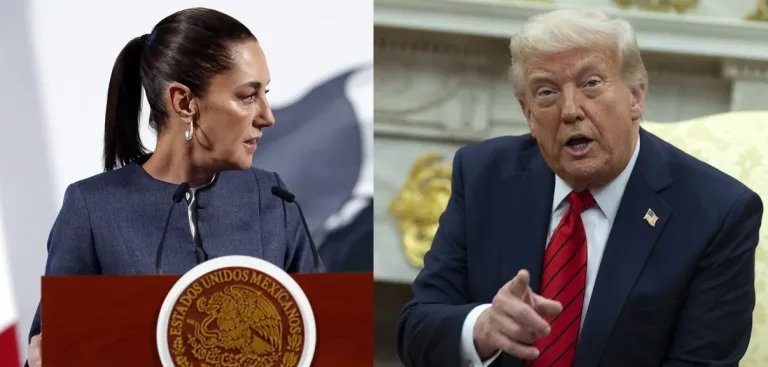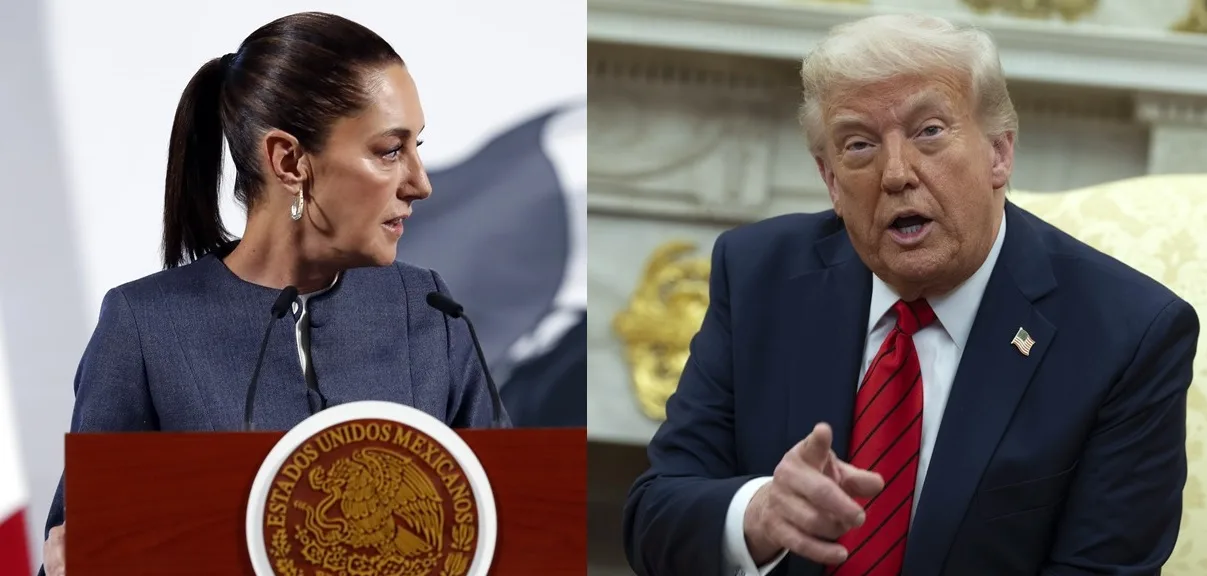
The complex diplomatic landscape between Mexico and the United States registered a high-level episode of tension reduction on Friday. Mexican President Claudia Sheinbaum held a telephone conversation with her U.S. counterpart, Donald Trump. The call occurs at a crucial moment, characterized by bilateral frictions in sensitive matters such as internal security and international trade. However, both leaders expressed their willingness to keep institutional channels open to resolve their differences.
The Mexican president herself took charge of disseminating the results of the meeting through a message on her official social media accounts. Sheinbaum described the exchange of opinions as a “cordial and excellent” conversation. According to the Mexican leader, during the call the commitment to continue working in a coordinated manner on security issues was reaffirmed. Likewise, continuity was given to the commercial talks currently being conducted between the technical teams of the two nations.
This direct contact acquires singular relevance given the immediate political context surrounding the two neighboring countries. The telephone call is shaping up as a new high-level contact within the Mexican Government’s diplomatic strategy. Since Donald Trump’s return to the White House, Mexico has sought to establish stable bridges with Washington’s new officials. These efforts seek to mitigate strident statements and consolidate institutional dialogue based on mutual respect.
What are the security tensions surrounding this bilateral dialogue?
The apparent harmony of the telephone call contrasts with recent disagreements generated by U.S. justice agencies. Tensions increased following formal accusations by the U.S. Department of Justice against Sinaloa Governor Rubén Rocha Moya. The neighboring country’s authorities point to the local official and other high-ranking state officials for alleged links to drug trafficking. Specifically, they are linked to illicit operations related to the powerful Sinaloa cartel.
The Mexican Government has severely criticized these public accusations, arguing an alarming lack of substantial evidence from Washington. The Sheinbaum administration has formally demanded that any judicial allegations be properly substantiated through the appropriate legal channels. To this scenario of mistrust is added Mexico’s complaint about alleged covert operations by the Central Intelligence Agency (CIA) in its territory. These events have generated a climate of reciprocal suspicion that the presidential call seeks to ease.
The security agenda between both countries has historically been marked by the fight against drug trafficking and fentanyl. The illegal flow of this synthetic substance northward remains the primary political priority for the White House. Within this framework, the Sheinbaum government has previously met with key figures from Trump’s new administration. Among them stand out Secretary of State Marco Rubio and Federal Bureau of Investigation (FBI) Director Kash Patel.
Where does Mexico draw the line in security cooperation with the U.S.?
Facing Washington’s pressures, the Mexican president has maintained a firm stance regarding national sovereignty. Sheinbaum has reiterated on multiple occasions that her administration accepts strategic coordination and the fluid exchange of intelligence information. However, the Mexican state categorically rejects any type of direct armed operation by foreign agencies on its soil. This position seeks to avoid the violation of the constitutional framework and local laws.
The controversy over the limits of cooperation recently ignited due to alleged interventions by U.S. agents in northern Mexico. Specifically, the participation of U.S. personnel in actions against drug laboratories in the state of Chihuahua was denounced. These unilateral actions have been viewed by Mexican analysts as unacceptable interference within national territory. Therefore, defining the rules of engagement in security is an urgent matter for Mexican diplomacy.
The phenomenon of irregular migration complements this intricate security panorama on the common border of more than