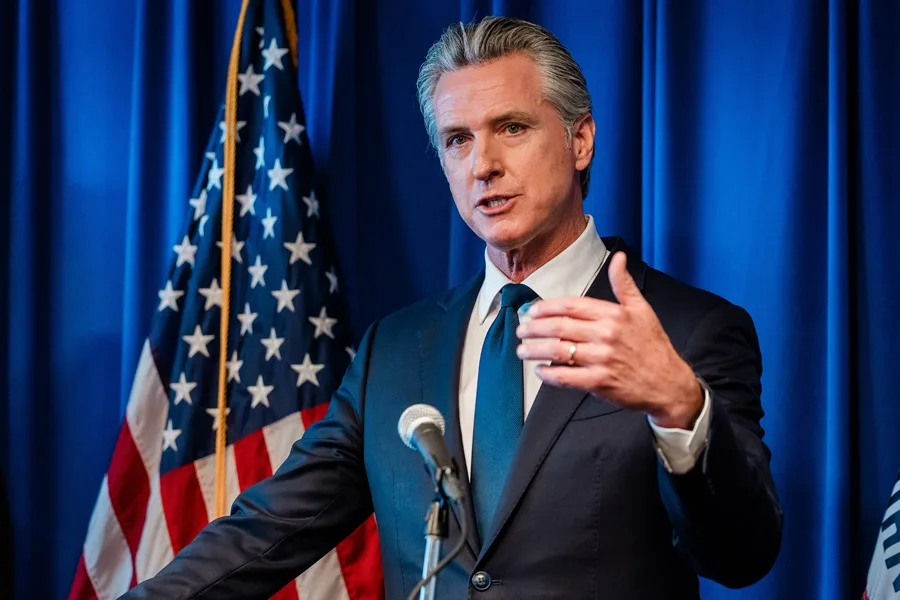
California Governor Gavin Newsom took a decisive step Thursday by presenting his revised budget proposal for the 2026 fiscal cycle. In what represents his final year leading the nation’s most populous state, Newsom outlined a spending plan of $350 billion. The highlight of this announcement is the absence of a budget deficit, a relief after years of financial instability. The governor will leave office next January, as he cannot seek a third consecutive term under state law.
This budget proposal comes at a moment of great political and economic significance for the region. Newsom seeks to protect programs that have defined his progressive management of one of the world’s largest economies. As he prepares for a possible presidential run in 2028, the governor presents this budget as a model of fiscal responsibility. According to legislative analysts, state spending has grown by more than $100 billion since 2020, generating constant criticism.
“We are reducing deficits. But we are not cutting what is essential,” Newsom said during his presentation to media and lawmakers. The message is direct for his critics, who contend that California systematically spends more than it receives annually. By strengthening reserve funds for difficult times, Newsom attempts to demonstrate that California’s model is sustainable long-term. This fiscal balance will be key to his political legacy before leaving the governor’s office in Sacramento.
How did California reverse deficit projections for 2026?
The change in state finances is primarily due to stronger-than-expected economic performance in strategic sectors. Revenues are $16.5 billion higher than January projections of this same year. This rebound was driven by a booming stock market and, especially, by the growing artificial intelligence industry. Thanks to this surplus, the state will avoid the $2.9 billion deficit that Newsom himself projected just a few months ago.
The governor’s office indicated that these funds will ensure there is no budget shortfall during the next fiscal year. Additionally, this windfall allows reducing by half the projected shortfall for the following period, providing greater stability. This represents a welcome change, as California faced deficits of tens of billions of dollars for several consecutive years. Last year, the crisis forced painful cuts, such as withdrawing free medical care for certain immigrant groups.
Legislative experts had previously projected that the state could record deficits exceeding $20 billion annually. However, the dynamism of Silicon Valley and new technology companies have injected fresh resources into public coffers. Despite this good news, nonpartisan analysts warn of the volatility of these revenues. California relies heavily on capital gains and technology company performance to fund its ambitious social programs.
What external risks threaten the stability of the new budget?
Despite current strength, Democrats maintain a cautious stance regarding possible federal funding cuts. There is lingering concern about the impact of the war in Iran, which has raised gas and energy costs. State officials have reiterated that California cannot alone compensate for all federal funds that could be withdrawn. This dependence on the federal government is a critical point for the sustainability of the state’s safety net.
During his remarks, Newsom took the opportunity to launch harsh criticism against former President Donald Trump’s policies. The governor stated that Trump “does not seem to care in the least about the financial situation of the average American.” Newsom positions his budget as a direct counterweight to Republican vision, prioritizing investment in education and public health. This rhetoric reinforces his national profile as the country closely watches the financial management of the “Golden State.”