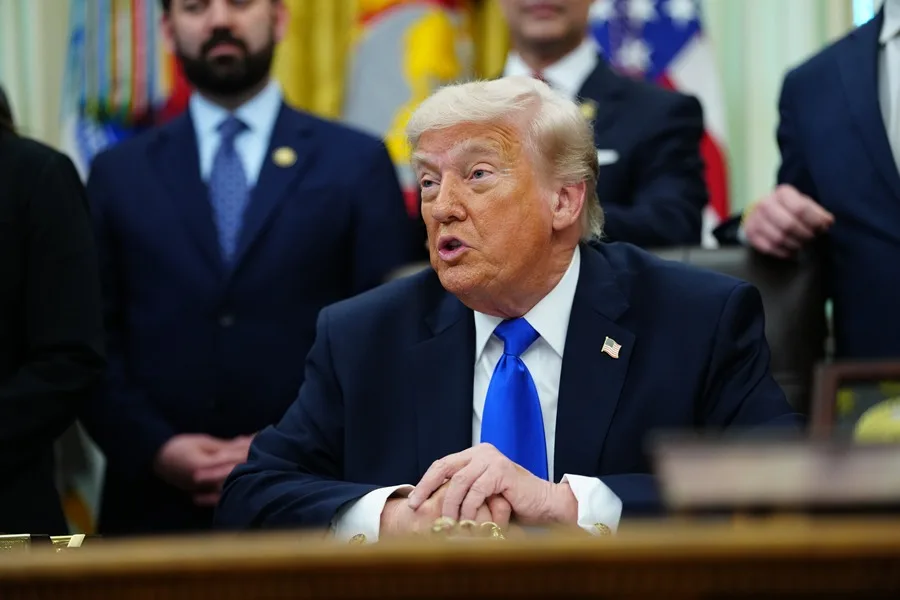
The U.S. tourism industry faces a new political threat. The Donald Trump administration is evaluating the withdrawal of Customs and Border Protection, known as CBP, agents from airports located in so-called sanctuary cities. The mere possibility has already triggered alarms among airlines, business groups, and sector authorities.
The warning was reiterated by Secretary of the Department of Homeland Security, Markwayne Mullin. According to the U.S. Travel Association, the official confirmed that he is considering this measure during a meeting with industry representatives. The proposal comes at an especially sensitive moment for international travel and air commerce.
If the idea is executed, the effects could be immediate. Airports need CBP agents to process international arrivals, review documentation, and allow the regular flow of passengers and cargo. Without this personnel, many operations would be compromised or suffer severe delays. That is why the debate is no longer just about migration. It is also economic and logistical.
Why Is the Threat to Airports Causing So Much Concern?
The U.S. Travel Association reacted swiftly. The group stated that such a measure would have devastating consequences for the tourism industry and for communities that depend on international visits. This is not a minor warning. Tourism drives employment, consumption, and commercial activity in many U.S. cities.
Major airlines also immediately condemned the proposal. Airlines for America, one of the most influential associations in the sector, warned that reducing CBP personnel at large airports would have a devastating effect. The organization alerted about major operational disruptions for airlines, travelers, and international cargo. In other words, the damage would not be limited to passengers.
Transportation Secretary Sean Duffy also distanced himself from the proposal. During a congressional hearing, he said the idea did not seem logical to him. He acknowledged that he was not aware of all of Mullin’s comments, but made clear his concern. In his view, it would be a bad sign to begin restricting travel over political differences. This position showed that within the government itself there is no completely unified line.
What Are Sanctuary Cities and Why Are They in the Crosshairs?
The term sanctuary city does not have a single, strict definition. Generally, it is used to describe jurisdictions with limited cooperation with Immigration and Customs Enforcement, ICE. That is, local or state governments that do not fully support certain federal immigration actions. This distance has been a constant source of conflict with Trump since his first term.
The president has attacked such policies for years. He had previously threatened to withdraw federal funding from sanctuary cities. However, courts blocked those attempts. During his first term, in 2017, federal courts blocked his plan to cut resources to those jurisdictions. That legal precedent still weighs on any new attempt at political or administrative pressure.
Now, the discussion is shifting to airports. Instead of talking about funds, the threat revolves around the withdrawal of federal personnel essential for the operation of international flights. The maneuver would be different, but would maintain the same political objective. To punish local governments that do not align with the White House’s immigration agenda. That is why the issue has generated so much concern in the private sector and Congress.
What Impact Would Removing CBP Agents Have?
The central question is practical. What would happen if an international airport loses CBP agents? The answer worries the entire air transportation chain. Without this personnel, the processing of foreign travelers would become slower, more chaotic, and in some cases, unviable. Immigration and customs review is an essential part of the airport system.
Elecciones primarias 2026: Abren centros de votación en Los Ángeles
Los Ángeles abrió 122 centros para votar en primarias 2026 y facilitar registro, boletas por...
Crisis química en California: Lo que debes saber hoy
Tanque con químicos tóxicos en California amenaza con explotar; 40.000 evacuados mientras bomberos intentan enfriar...
The i