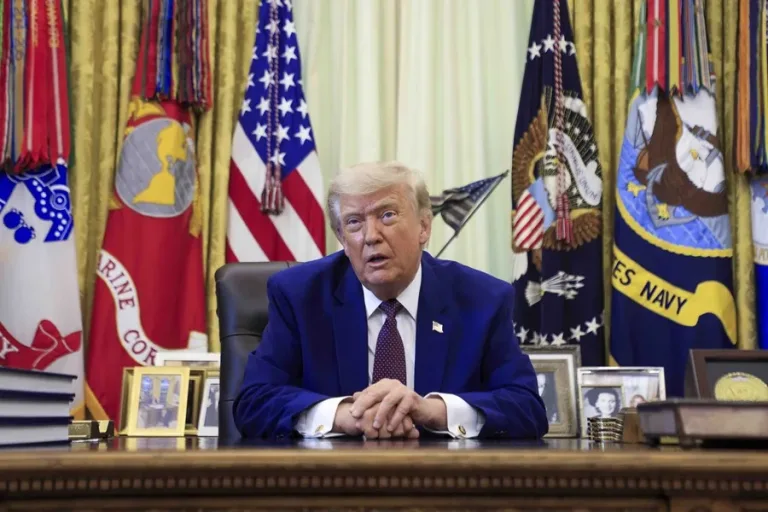
U.S. President Donald Trump signed an executive order that eliminates labor protections for approximately 8,000 federal employees. The measure primarily impacts career officials who participate in the formulation and implementation of public policies. The decision represents a significant change in the functioning of the public administration. It allows these workers to be dismissed more easily. The government argues that it seeks to improve efficiency and alignment with its policies. However, the order has generated a strong reaction among unions and experts. They warn that it could weaken the independence of the civil service and open the door to political decisions in personnel management.
What Does Trump’s Executive Order Establish?
The measure eliminates traditional protections that safeguarded certain federal employees. These workers, considered career staff, had job stability against discretionary dismissals. The order focuses on those who perform key functions. It includes program directors, technical advisors, and agency lawyers. It also covers those who participate in drafting regulations. With the change, these positions become more vulnerable. They can be removed more easily by the administration. This modifies the balance between political and technical officials.
Why Did the Government Decide to Implement This Measure?
The White House maintains that the decision responds to previous experiences. During Trump’s first term, some career officials would have hindered policy decisions. The government considers that certain employees were not aligned with its objectives. This, according to its argument, made policy implementation difficult. The measure seeks to prevent that scenario. It is also presented as a way to streamline administration. It would allow replacing officials who do not share the Executive’s vision. This has been presented as an improvement in efficiency.
Who Does the Elimination of Labor Protections Affect?
The order impacts approximately 8,000 employees in an initial phase. These are workers with strategic roles within the government. Their functions influence key decisions. Among them are highly specialized professionals. Many have years of experience in public administration. Their salaries typically range around $200,000 annually. The administration has indicated that the number could increase. However, in the future, up to 50,000 employees could be affected. This would expand the scope of the measure.
What Criticisms Have Emerged Following the Announcement?
Unions have been the main opponents. They point out that the measure puts public service neutrality at risk. They fear politically motivated dismissals will occur. However, they also warn about the loss of institutional experience. Career officials provide technical knowledge. Their replacement could affect the quality of policies. Public administration experts agree on some concerns. They consider that the measure could weaken internal controls. This would have governance implications.
What Implications Does It Have for the Federal System?
The order modifies the relationship between the Executive and the civil service. Traditionally, career officials operate with a certain degree of independence. This ensures continuity in policies. With the new scheme, political control increases. The president will have greater capacity to influence the administrative structure. This changes the institutional dynamic. The impact could extend to multiple agencies. Implementation will depend on how the changes are applied. The process will be closely watched by different sectors.
What Could Happen in the Coming Months?
The measure is expected to generate legal challenges. Unions and organizations could resort to courts. However, they would argue that the order violates labor rights. There will also be attention to