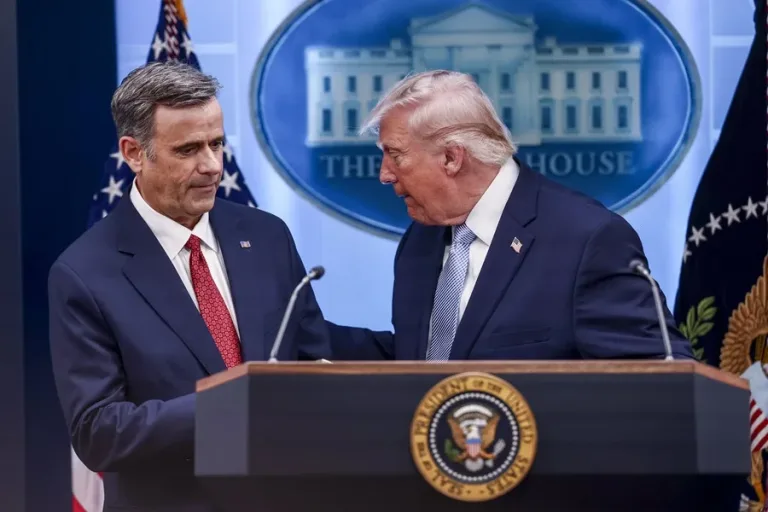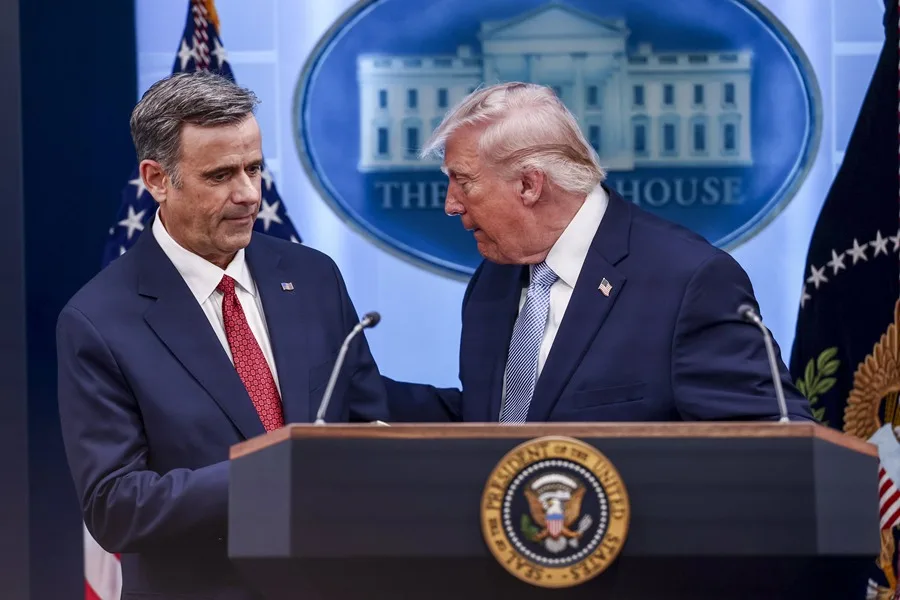
The visit of CIA Director CIA John Ratcliffe to Havana shook the political landscape between the United States and Cuba on Thursday. The official arrived with a direct assignment from Donald Trump. According to an agency official, the intelligence chief was sent to transmit a confidential message, with an offer of dialogue conditioned on profound changes to the Cuban regime.
Ratcliffe met with Raulito Rodríguez Castro, Cuba’s Interior Minister, head of the intelligence service and grandson of Raúl Castro. The meeting was confirmed by a CIA official and by an official statement from the regime. The meeting occurred at a delicate moment. The island is experiencing an energy crisis and Washington has again tightened its political pressure.
According to the U.S. version, Trump’s envoy carried a clear negotiation formula. The United States says it is willing to compromise on economic and security issues. But it presents a central condition. Cuba must execute fundamental changes if it wants to open a new chapter in bilateral relations.
What Was Washington Seeking with John Ratcliffe’s Visit to Havana?
The CIA official asserted that Ratcliffe addressed matters of intelligence, security, and economic stability. Everything was raised under a concrete premise. Cuba can no longer serve as a safe haven for U.S. adversaries in the Western Hemisphere. That phrase summarizes the tone of the mission. It was not a protocol visit or a signal of gratuitous détente.
The CIA itself distributed photos of the meeting on its official account. That gesture sought to give a public character to an operation that, by its nature, had strong political content. In parallel, the Cuban regime attempted to establish its own narrative. It claimed that it provided information that would categorically demonstrate that Cuba does not represent a threat to U.S. national security.
Havana also insisted on another sensitive point. It said there are no legitimate reasons to keep the island on the list of countries that allegedly sponsor terrorism. That point became key again since Trump’s return to power. The Biden administration had removed Cuba from that list in January 2025. Trump restored that designation on his first day of his second term.
Why Does the Trip Occur at Such a Critical Moment for Cuba?
The meeting took place as Cuba faces a severe energy crisis. The blow was greater following the capture of Nicolás Maduro in Venezuela, executed by U.S. armed forces in January. Caracas was one of the most important allies of the Cuban regime. It was also a vital source of oil to sustain the island’s electrical system.
Cuba’s Energy Minister, Vicente de la O Levy, acknowledged Wednesday to state media that the country has run out of oil. That statement raised internal alarm. The lack of fuel hits electricity generation, transportation, and economic activity. In that scenario, any message from Washington carries greater weight. It is no longer just about geopolitics, but about internal survival.
Trump, according to officials cited by NBC News, would be increasingly frustrated by the Cuban regime’s ability to remain standing. The White House has applied a policy of total pressure. However, the U.S. Government has not been able to force a change of power on the island. Ratcliffe’s visit suggests a tactical adjustment. Maintaining pressure remains the line, but now a conditional door appears for negotiation.
What Role Does the U.S. Offer of Aid Play?
Wednesday, the State Department announced that the United States is willing to deliver $100 million in direct assistance to the Cuban people. The proposal also includes support for free and fast satellite internet. Washington presented that offer as urgent humanitarian aid. But it accompanied it with a harsh political message. It described Cuba’s regime as corrupt and responsible for social suffering.
FBI en la mira: Kash Patel habría inflado datos de arrestos
El director del FBI, Kash Patel, es acusado de inflar estadísticas de arrestos y alterar...
Xi Jinping a Trump: “Seamos socios y no rivales en 2026”
El presidente chino Xi pidió a Donald Trump cooperación y no rivalidad en una cumbre...