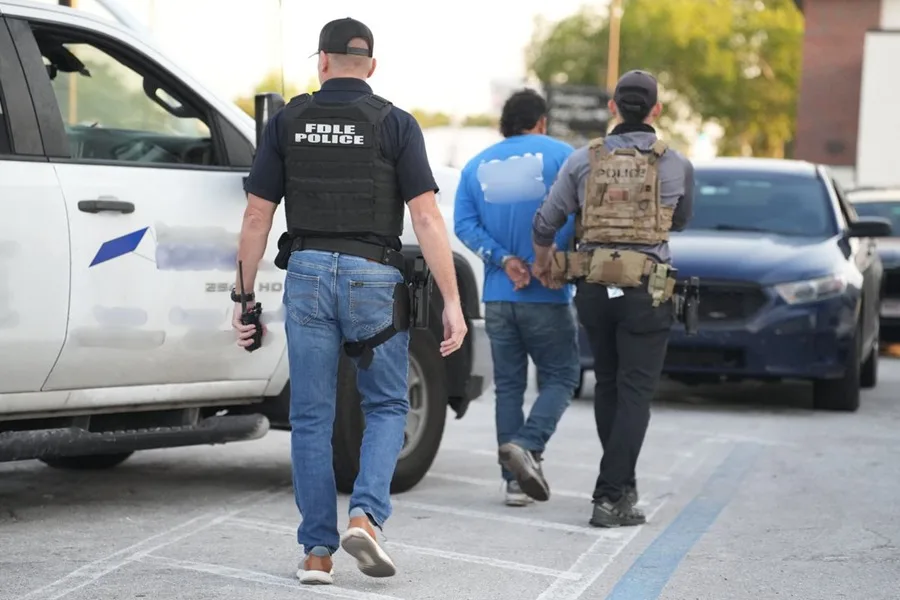
A federal judge partially blocked the implementation of the controversial state law SB 4 just one day before its official effective date. This judicial ruling once again pauses one of the most severe and debated local legislations in the country. The ruling has immediate repercussions on how authorities enforce border and immigration controls.
The decision was issued by federal district judge David Alan Ezra, who ruled to suspend several fundamental sections of the regulation. The judge based his position on the consideration that the state provisions directly infringe upon powers that exclusively belong to the federal government. The legal dispute underscores the ongoing political tension between state administration and Washington’s national security directives. For the Hispanic community, this pause represents temporary relief amid a climate of high uncertainty.
SB 4 law has been subject to multiple court battles since its conception due to its severity. Its practical application would radically change the daily work of law enforcement in Texas cities and counties. By halting its execution, the federal court temporarily prevents a drastic transformation in community surveillance within the state. The litigation highlights the complexity of balancing local border security demands with the country’s constitutional mandates.
Which parts of SB 4 law are suspended by the court order?
Judge Ezra’s ruling temporarily halts the most punitive powers that the law granted to Texas law enforcement bodies. The decision immediately prevents state, local, or county police from detaining people based solely on suspicion of irregular immigration status. This means that law enforcement agents cannot make arrests based only on the presumption that someone entered the country without federal authorization.
Likewise, the ruling blocks the ability of state court judges to order the removal or deportation of detainees. The creation of new state crimes linked to unauthorized reentry to the United States has also been completely frozen by the court. This partial suspension alleviates the concerns of civil organizations about possible fragmentation of due legal processes in the state.
Among the disabled regulatory points are criminal penalties for violating removal orders issued by local magistrates. The opening of state trials in cases where federal deportation or asylum proceedings are still ongoing was also suspended. The interference of local agencies in federal justice cases constituted one of the most criticized points of the Texas legislation.
| SB 4 Law Provision | Current Legal Status | Current Competent Authority |
| Detention based on suspicion of irregular status | Suspended by federal order | Federal Agencies (CBP / ICE) |
| Removal orders issued by local judges | Temporarily blocked | Federal Immigration Courts |
| Creation of state crimes for reentry | Frozen | Federal Criminal Code |
| State criminal proceedings with federal asylum in progress | Disabled | Department of Justice (DOJ) |
What were the constitutional arguments used by the federal judge?
In his ruling, Judge David Alan Ezra stated that allowing state laws of this type would damage the constitutional order. The judge firmly warned that granting these powers to the states would create a completely fragmented system of immigration regulations at the national level. “It could open the door for each state to approve its own version of immigration laws,” he noted in detail.