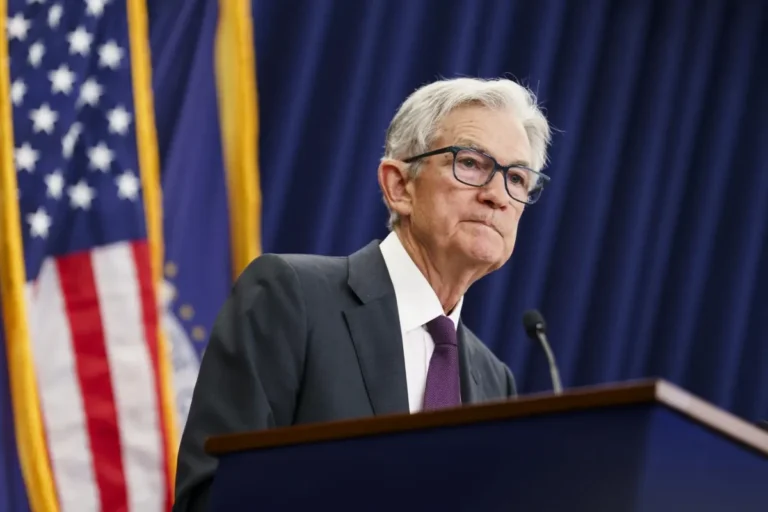
The U.S. financial landscape experienced a historic day of transition and deep institutional divisions. Renowned economist Jerome Powell stepped down this Friday from the presidency of the Federal Reserve (Fed) after completing an eight-year term. His management of the central bank was defined by unprecedented challenges in contemporary economic history. The official had to steer the institution through the ravages of the COVID-19 pandemic and subsequent hyperinflation. Additionally, he faced a constant campaign of political pressure exercised by President Donald Trump.
Powell’s trajectory at the central bank began long before assuming the primary leadership of the financial entity. In 2011, then-President Barack Obama nominated him to serve on the Board of Governors of the agency. With solid previous experience in investment banking and as Deputy Secretary of the Treasury, Powell demonstrated a respected technical profile. Subsequently, in 2018, Donald Trump nominated him to succeed Janet Yellen in the Fed presidency. At that time, the Republican leader praised his notable capacity for building stable technical consensus.
When Powell took the helm of the Fed, the U.S. economy showed clear signs of strong dynamism. Gross domestic product was growing above 4% and unemployment was at historic national lows. Meanwhile, the inflation index was aligned with the institution’s 2% annual target. To preemptively cool the economic engine, the Fed raised interest rates four times during its first year. This monetary strategy would provide crucial room for maneuver for the global crisis approaching.
How Did the COVID-19 Crisis Transform Interest Rates?
Macroeconomic stability was abruptly interrupted in March 2020 with the arrival of the first wave of coronavirus infections. Faced with a complete halt in commercial activity, the Fed convened an emergency meeting of its governors. In that historic session, the agency implemented a drastic cut of one and a half percentage points to reference rates. Interest rates fell virtually to 0%, seeking to inject immediate liquidity into the paralyzed financial system. They remained at this expansive level for nearly two consecutive years.
The course of U.S. monetary policy changed direction radically in early 2022. By February of that year, year-over-year inflation had skyrocketed to nearly a worrying 8%. Supply chain paralysis and massive economic stimulus had overheated consumer prices alarmingly. Facing an inflationary escalation unseen since the oil crisis, the central bank was forced to act relentlessly. Over the following 18 months, the institution raised interest rates by more than five percentage points.
| Economic Period | Interest Rate Level | Macroeconomic Context |
| March 2020 – February 2022 | Virtually at 0% | Emergency stimulus due to COVID-19 |
| February 2022 – Mid-2023 | Increase of more than 5 points | Response to 8% inflation |
| May 2026 (Present) | Restrictive levels | Price moderation and uncertainty |
This forceful monetary tightening strategy generated harsh criticism from various analysts and political sectors of the country. Kevin Warsh, Powell’s recently nominated successor, has questioned the slow initial response of the agency. According to Warsh, the Fed maintained an expansive profile for too long, fostering a five-year period of uncontrolled inflation. The leadership transition occurs in a technical environment clouded by these opposing views on the recent past.
How Did the White House Pressure Campaign Escalate?
Donald Trump’s return to the presidency of the nation in 2025 reactivated hostilities against the Fed’s direction. Despite having nominated him in the past, the Republican leader raised the tone of his public demands. Trump demanded flexibility in monetary policy and criticized the central bank’s management decisions.