California once again leads the list of states with the most expensive gasoline in the country. The average price of a regular gallon stands around USD 6.15, well above the national average of USD 4.56, according to data cited by Infobea. The difference is not minor, because it directly affects daily mobility, cost of living, and the operation of thousands of small businesses.
The increase does not respond to a single cause. California has dragged on for years with a more expensive fuel market due to state taxes and the mandatory use of cleaner fuel blends. These formulas reduce emissions, but they also increase production and distribution costs. Added to this was the recent closure of 2 refineries in just 6 months, which reduced internal supply capacity.
Pressure increased even more due to the international context. The conflict with Iran drove up global oil prices and strained energy supply through the Strait of Hormuz, a key route for global trade. Consequently, California became more exposed to costly imports and a more fragile supply chain. That is why the record gasoline price is no longer just a pump problem. It has become a discussion about inflation, inequality, and climate policy.
Why is gasoline more expensive in California?
California has a different energy model than much of the country. The state applies high taxes on fuels and requires reformulated gasoline, designed to reduce air pollution. That special blend costs more to produce and also limits market flexibility when there are interruptions in refineries or crude transport.
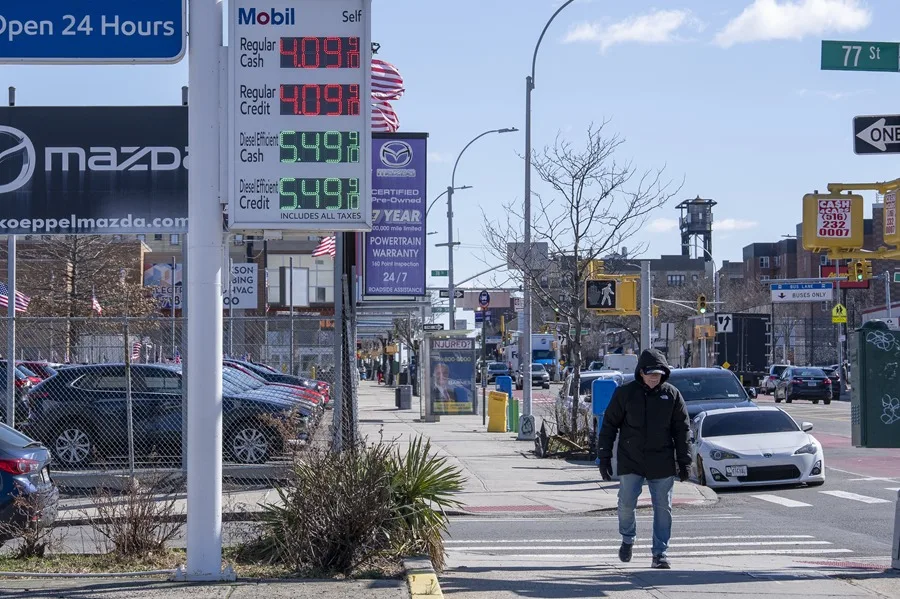
The situation worsened with the loss of local refining capacity. When 2 refineries stop operating in such a short period, the system becomes more sensitive to any external disruption. Instead of relying on local production, California must import more finished fuel or components to refine it. That change raises logistics costs and, moreover, exposes the state to sharper international variations.
The result is visible to any driver. While other states continue operating with high but manageable prices, in California fuel has become an expense that reorganizes entire family budgets. It is no longer just about filling the tank. For many people, it is about deciding whether it is worth going out, working further away, or maintaining a business that depends on daily routes.
How does daily life change?
The impact appears fastest in households. Expensive fuel modifies routes, reduces outings, and forces recalculation of basic expenses. In Ventura, Patrick VanHorn chose to travel the country in an electric vehicle, because flights and traditional fuel were no longer reasonable, according to the case cited by Infobea.