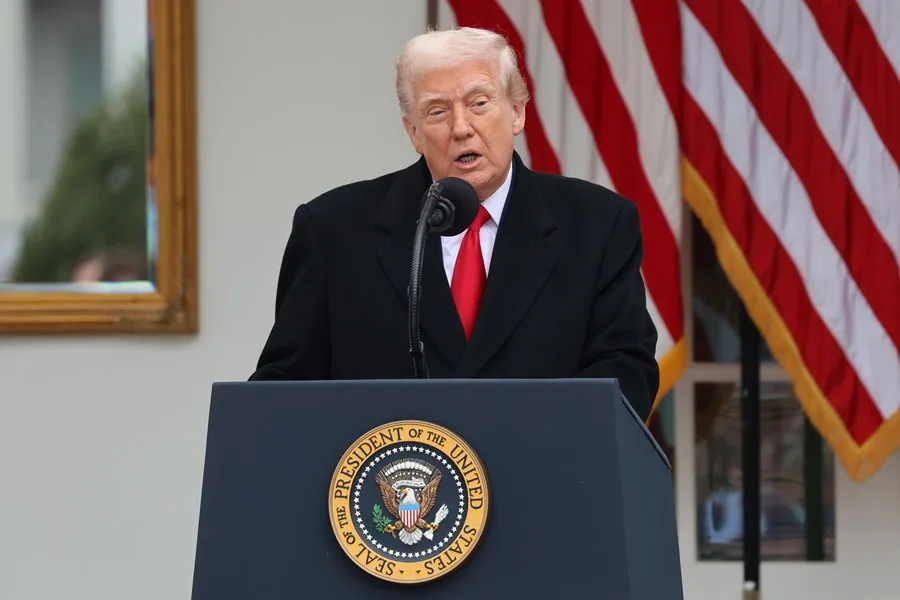
President Donald Trump made forceful statements to the national press this Tuesday. He claimed he completely ignores the enormous economic burden of the current war. This military conflict against Iran seriously affects the pocketbooks of Americans.
These surprising remarks came from the iconic South Lawn of the White House. The president was preparing to begin a strategic diplomatic trip to China. A journalist asked him directly about his true motivations for negotiating.
The press questioned whether the citizens’ economic situation was driving possible peaceful negotiations. Trump responded in a very blunt manner to various media outlets. He asserted that the financial well-being of Americans motivates him not at all.
Why Does Trump Ignore Current Economic Impact?
The president emphasized that the nuclear threat surpasses any other domestic problem. “Not even a bit,” he quickly responded when asked about the economic aspect. He insisted they will never allow the Islamic nation to develop atomic bombs.
“I don’t think about the financial situation of Americans,” he stated without hesitation. The Republican leader said his only real concern is security. He added that all citizens in the country perfectly understand this harsh stance.
He even downplayed possible fluctuations in the financial market during this tense period. He mentioned that the U.S. stock market is currently at historic highs. However, he clarified that a sharp stock market decline would not change his decision.
How Does the Conflict Affect American Pocketbooks?
The military conflict formally began in late February of last month. The United States and Israel launched powerful joint attacks against Iranian territory. Tehran’s rapid response caused enormous consequences for global commerce.
Iran blocked maritime access to the strategic and vital Strait of Hormuz. This important Asian route channels 20% of the world’s oil supply. The unexpected closure immediately drove up international prices for precious hydrocarbons.
Gasoline prices in the United States suffered very drastic increases. According to data from the American Automobile Association (AAA), the gallon averages $4.50. Diesel also rose rapidly, reaching $5.64 per gallon nationally.