Global financial markets reacted strongly to the announcement of a provisional agreement between the United States and Iran. The news triggered a significant decline in oil prices and a broad rally in international stock markets. The pact, which aims to end three months of conflict, includes the reopening of the Strait of Hormuz. This maritime corridor is key to energy commerce, as nearly 20% of the world’s crude oil supply passes through it. President Donald Trump confirmed the agreement and announced the lifting of the naval blockade. Official signing is scheduled for June 19 in Switzerland, although several issues remain to be negotiated.
Why Did Oil Prices Fall Following the Agreement?
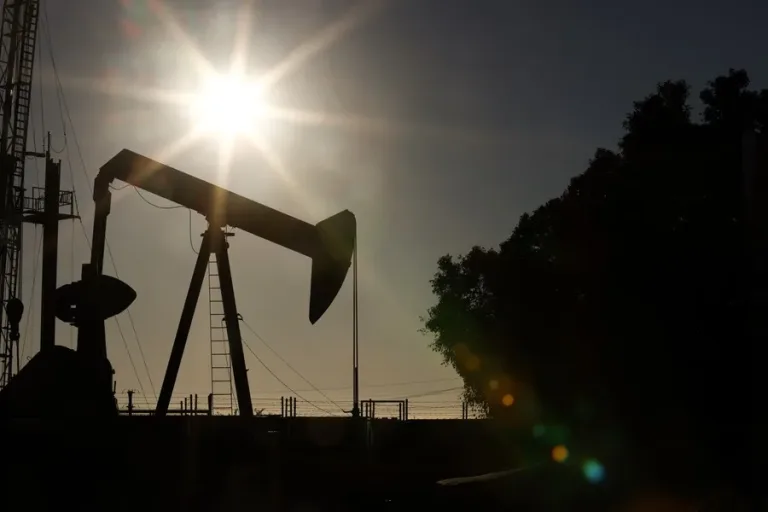
The energy market reacted immediately. Crude prices recorded a decline exceeding 5% following the agreement announcement. Brent, the international benchmark, fell to $82.96 per barrel. Meanwhile, West Texas Intermediate (WTI) stood around $80.35. The main reason is the expectation of greater supply. The reopening of the Strait of Hormuz will allow restoration of the oil flow that had been interrupted during the conflict.
What Role Does the Strait of Hormuz Play in the Global Market?
The Strait of Hormuz is one of the most strategic points in global trade. One-fifth of the planet’s oil consumption passes through this passage. During the conflict, the blockade generated uncertainty and drove prices higher. Crude surpassed $110 per barrel at its most critical moments. With the reopening, the market anticipates a gradual normalization. However, analysts warn that the process could take longer than expected.
How Did International Stock Markets React?
The positive impact quickly spread to equity markets. Major stock exchanges recorded significant gains across different regions. In Asia, Japan’s Nikkei 225 rose 5% and reached a record high. South Korea’s Kospi advanced 5.2%, while Shanghai’s index gained 1.6%. In Europe, Germany’s DAX led the gains with a 1.3% increase. The French CAC 40 and British FTSE 100 also registered advances.
What Happened on Wall Street Following the Announcement?
The upward trend continued in the United States. Wall Street opened the week with gains in its major indices. The Dow Jones advanced 1%, while the S&P 500 rose 1.5%. The Nasdaq, driven by the technology sector, recorded an increase of 2.4%. Analysts noted that the market was awaiting a sign of easing tensions. The reduction in geopolitical risk generated confidence among investors.
What Do Experts Think About the Agreement?
Although the initial reaction was positive, some analysts call for caution. They note that the agreement is still preliminary and its implementation will take time. Specialist Stephen Innes indicated that the reopening of Hormuz is a relief, but does not guarantee complete stability. The market will need to assess compliance with the pact. Other experts consider the announcement a first step. However, they warn that negotiations over Iran’s nuclear program will be decisive.
What Other Factors Influence Market Optimism?
The financial context is also being driven by other elements. Notable among these is SpaceX’s recent initial public offering. Elon Musk’s company recorded a strong debut, with a 19.2% increase on its first day. This revived interest in the technology sector. Additionally, corporate moves such as TripAdvisor’s sale of TheFork also influenced the market. These factors add to the momentum generated by the geopolitical agreement.
How Does the Fall in Oil Prices Impact Inflation?
The decline in prices