The administration of U.S. President Donald Trump announced a migration regulation that modifies access to legal benefits in the country. From now on, the federal government will require foreign nationals with temporary visas to leave the United States. This measure applies to those who wish to apply for permanent legal residency, known as green card. Therefore, this provision directly transforms the way professionals manage their legal status.
Historically, foreign nationals with active temporary migratory status could change their category internally. In this way, they did not need to cross borders. According to official reports published by the news agency The Associated Press, this procedure is called status adjustment. The benefit allowed spouses of U.S. citizens to complete their paperwork on North American soil for more than half a century. However, the new directive establishes that the ordinary process must now be conducted mandatorily abroad.
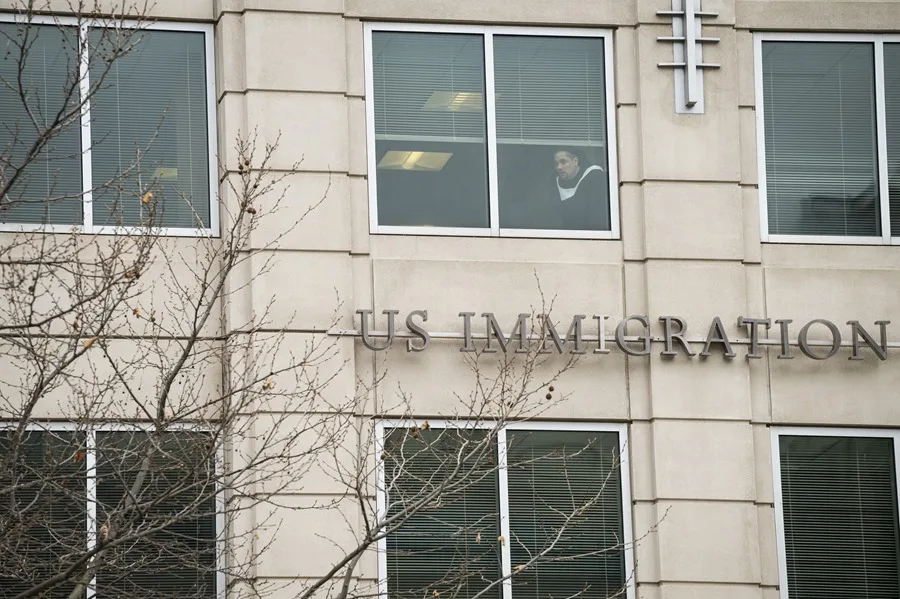
For its part, the U.S. Citizenship and Immigration Services (USCIS) argued that the measure is based on existing law. According to federal authorities, previous administrations ignored these clauses for decades. This generated excessive use of internal provisional benefits. For this reason, the administrative restructuring seeks to restore original rigor to the regulatory system as it was designed.
How will the new mandatory consular procedure operate for non-immigrant visas?
Under the new policy established, people residing in the nation through non-immigrant visas will have to modify their legal plans. First, this directly includes those who hold tourism or business visas in the B-1 and B-2 categories. Similarly, the regulation will immediately affect international students enrolled in academic centers under the F-1 and M-1 programs.
Additionally, workers who sustain crucial economic sectors through temporary work permits will see a substantial impact on their daily operations. The rule encompasses H-1B visas for highly specialized occupations. It also includes the H-2A and H-2B categories intended for agricultural work. According to the official statement from USCIS, the State’s intention is for consulates to handle these residencies from abroad. This general rule will apply except in exceptional circumstances that the agency will evaluate on an individual basis.
| Temporary Visa Category | Original Purpose of the Visa | Mandatory Procedure Destination |
| B-1 / B-2 | Business and General Tourism | Consulate in country of origin |
| F-1 / M-1 | Academic and Technical Studies | Consulate in country of origin |
| H-1B | Specialized Professional Employment | Consulate in country of origin |
| H-2A / H-2B | Agricultural and Service Work | Consulate in country of origin |
Consequently, the regulatory change seeks to close legal loopholes regularly used to extend stays. USCIS official spokesperson Zach Kahler confirmed that the visas