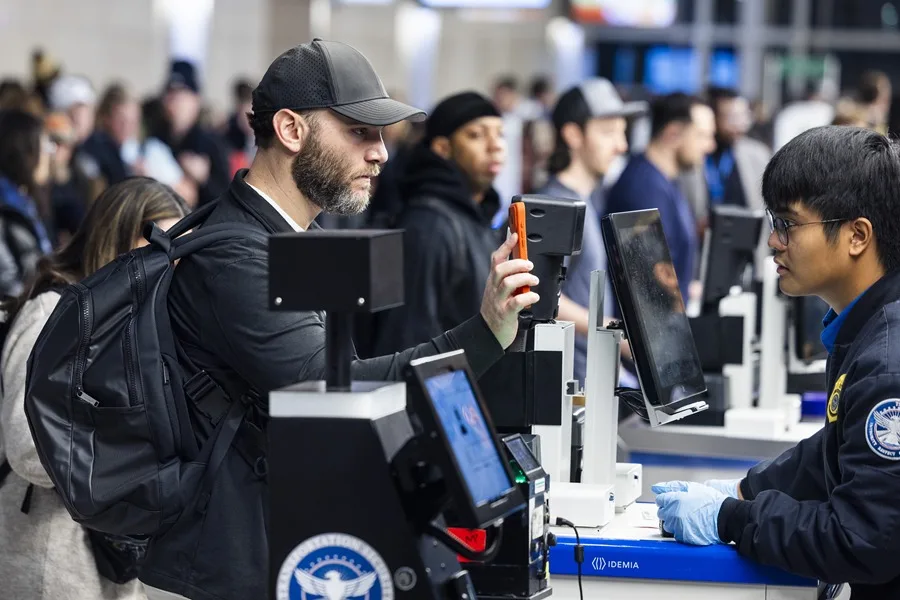
A federal judge in the United States blocked the policy promoted by the Government of Donald Trump that imposed a $100,000 fee on new H-1B visas. The decision represents a major setback for one of the administration’s most controversial immigration measures.
The ruling was issued by Judge Leo Sorokin from a court in Boston. The judge determined that the fee is illegal, concluding that the Executive exceeded its authority by imposing it without Congressional authorization. The ruling responds to a lawsuit filed by a coalition of 20 states.
The measure had been announced in September by Secretary of Commerce Howard Lutnick. According to his explanation at the time, the objective was to pressure major technology companies to prioritize hiring American workers.
Why Did the Judge Consider the $100,000 Fee Illegal?
In his 42-page ruling, Sorokin classified the fee as a tax. This point was crucial to his decision, since the U.S. Constitution establishes that only Congress can create taxes. The Government, therefore, did not have the authority to impose that fee unilaterally.
The judge also noted that the policy represented an overreach of the Executive branch. The lawsuit argued that the Trump Administration acted without sufficient legal basis. The court agreed with this argument and decided to block the measure immediately.
The ruling sets a relevant precedent in immigration policy. It reinforces the boundary between the powers of the Executive and Legislative branches. Additionally, it sends a clear message about the scope of administrative decisions on sensitive issues.
What Are H-1B Visas and Who Do They Affect?
H-1B visas allow U.S. companies to hire highly skilled foreign workers. This program was established by Congress and has defined annual limits. Currently, 65,000 visas are granted per year.
That number is supplemented by 20,000 additional visas. These are intended for foreigners who hold master’s degrees or higher qualifications obtained in the United States. The system seeks to meet specific labor market needs.
Sectors such as technology, health, renewable energy, and agriculture depend heavily on this type of visa. Companies use this mechanism to fill positions that require specialized skills. For this reason, any changes to the program have wide-reaching impact.
What Impact Did Trump’s Measure Have?
The $100,000 fee was interpreted as a significant economic barrier. Many companies, especially smaller ones, would have had difficulty assuming that cost. This could have reduced the hiring of foreign talent.
Departamento de Justicia busca quitar la ciudadanía a 17 personas
El Departamento de Justicia demanda a 17 inmigrantes naturalizados de varios países para revocarles la...
Abuchean a Trump en las Finales de la NBA en Nueva York
Trump fue abucheado en las Finales de la NBA en Nueva York, reflejando la polarización...
The American Immigration Lawyers Association (AILA) warned about its effects. According to the organization, the measure not only affected the technology sector. It also impacted key industries such as medical and energy.
Shev Dalal-Dheini, AILA’s Director of Government Relations, harshly criticized the policy. She stated that the proposal was designed to create chaos in the immigration system. Additionally, she denounced the lack of clarity about who would be exempt from the fee.
What Role Did the States Play in the Lawsuit?
The state of California led the coalition that filed the lawsuit against the federal Government